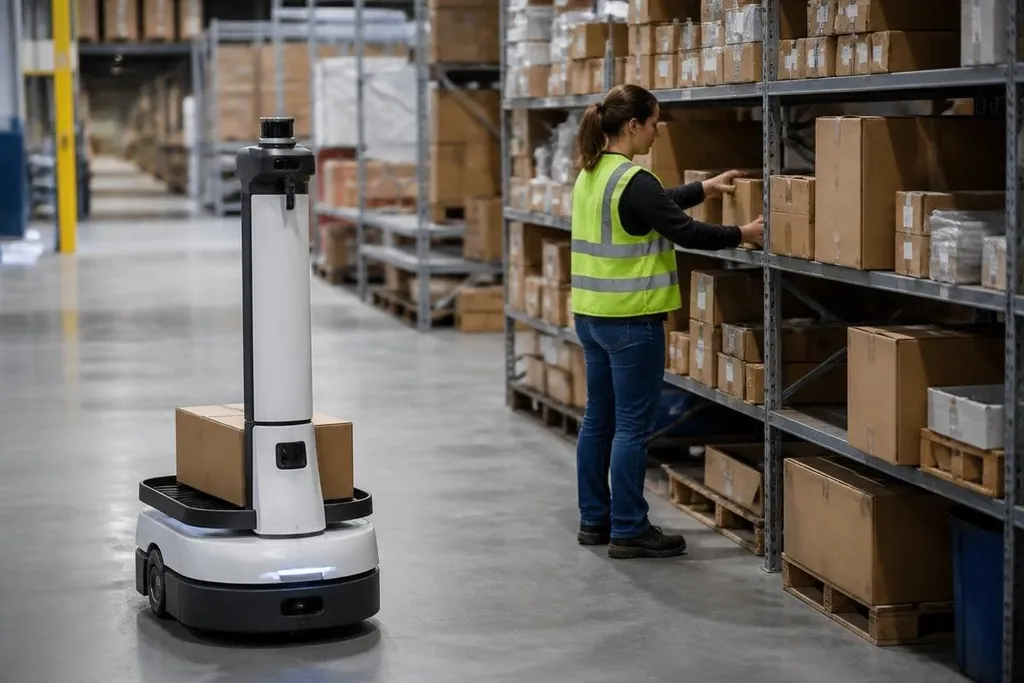
A warehouse robot can log a worker’s location, task times, pauses, and errors while it moves through the same space. That turns a safety or productivity tool into a worker surveillance system unless the company sets clear limits first.
- Robots can collect more worker data than the task requires.
- Productivity scores can miss blocked aisles, faulty tools, or unsafe instructions.
- A written data rule matters as much as the robot’s camera or software.
What the robot can see
A mobile robot may use cameras, LiDAR, badge readers, or wireless tags to move safely. Those systems can also create records about people nearby, including where they stood, how long they waited, and which task they handled.
The record grows when software joins those events together. A camera clip tied to a badge number and a task log can show who entered an area, when they arrived, and how long the job took.
Each item may have a valid use. The combined record can say far more about a worker than the original task required.
That difference matters. A robot needs a person’s position to avoid a collision. It may not need to keep a face image for 90 days or rate a worker’s pace after an aisle blockage.
When a safety tool becomes a work score
Safety data and performance data serve different jobs. A system that stops a robot when a person enters its path helps prevent an injury. A manager who uses the same sensor feed to rank workers has made a new decision about the data.
The software may also miss the reason behind a delay. A worker could wait for a pallet, report a damaged package, clear a jam, or follow a supervisor’s instruction. A time stamp records the pause, but it doesn't explain it.
That gap can produce unfair scores. The risk rises when a robot’s count becomes part of discipline, pay, promotion, or dismissal without a human checking the cause.
That human check also depends on knowing what the robot records, who can see it, and how long the data stays stored. Reporting on workplace robotics can tie those rules to the machine and worksite before the rollout begins.
The data rule should come before the rollout
A company can set limits before a robot enters a work area. The rule should name each data type, its purpose, who can see it, and when the system will delete it.
Workers also need a way to challenge a record. If a dashboard says someone took 18 minutes on a task, that person should be able to see the event, report the blocked route or faulty equipment, and ask for a review.
Access needs care too. A safety manager may need live location data during an emergency. A payroll team may need approved hours. Neither group needs unrestricted access to every camera clip.
The strongest opposing view is practical: companies need records to find unsafe layouts and fix slow processes. That case holds when the data stays tied to those jobs and the company doesn't quietly turn it into a worker ranking system.
A checklist for a fair deployment
Use this list before connecting a robot’s logs to staff records:
- Name the purpose: write down the safety or task problem the data must solve.
- Collect less: record position or event time when a face image isn't needed.
- Set a deletion date: remove raw video and location history after the stated job ends.
- Limit access: give live feeds and stored records to named roles only.
- Test the score: compare robot records with blocked routes, equipment faults, and supervisor instructions.
- Offer review: let workers see an error and ask a named person to check it.
What happens next
Robots will keep adding sensors because safe movement needs information about people and objects. The line that matters is drawn after collection: companies must decide which records stay, which records go, and who gets to use them.
I'd reject any system that turns raw robot logs into automatic worker penalties. A safer rule is plain: use the least personal data needed for the task, delete it on a fixed date, and require human review before it affects a person’s job.